by Dan Underbrink
The Swim Meet! The 2022 Pan Pacific Masters Games
It is unlikely that my readers will need any convincing that swim meets are fun! The camaraderie, the sportsmanship, the excitement, the challenge, the competition, one’s teammates, great friendships…the list of positives goes on and on! It can be even more fun when the meet one is attending is a major event, or has some unusual feature, such as lots of relays or a “Pentathlon” format. Another thing that can make a swim meet both fun and memorable, would be a compelling location.
The 2022 Pan Pacific Masters Games, held November 9-12, in Gold Coast, Queensland, Australia, was an event that checked all the boxes! It was a four-day, major, international, long course swimming competition, in a place that I have always had an interest in seeing. The “unusual” feature of this event (for U.S. Masters Swimmers anyway) was that besides the normal 50, 100, and 200-meter distances, these Games offered a 400-meter and an 800-meter racing opportunity for each stroke!

Two Puget Sound Masters swimmers, Dan Underbrink (TWIM) and wife, Mary Underbrink (Lake Washington Masters) made our way to Australia to compete in these Games – AND to do some touring and sightseeing! Only one other USMS swimmer was registered at the Games, but we did not ever get a chance to meet her. She was from Emerald Aquatics in Eugene, OR.
Planning the Trip
Our road to Australia had started with completely different intentions. We had planned to travel to Kobe, Japan, to swim in the World Masters Games in 2021, but after those Games were first delayed, then ultimately canceled due to Covid-19 concerns, we started to consider other possibilities.
In early January, I was viewing links at the bottom of the PNA Pool Meets Web page and started learning about the Pan Pacific Masters Games. I was intrigued by the opportunity to compete in an individual stroke 800-meter race. I talked about it with Mary, and we began looking into the feasibility of the trip.
About 10 days later, we had decided to make the trip to Australia. I have a flag hung up across my office window, to provide me daily motivation when I am planning to swim in a major event. The Japan flag came down and the Australia flag went up! The message: Let the Training Begin!


As I began training for 800-meter and 400-meter races, Mary began planning the other parts of our trip. She set up flights, lodging, the rental car, and some great sightseeing tours! We would first fly to Vancouver, BC, and then a long one (about 14 hours) to Brisbane, Australia. We would tour around the Brisbane area for five days, then move about an hour south, to Gold Coast, for the four days of competition. Our last night there would be right next to the Brisbane airport, flying back out to Vancouver, BC the following morning.
Touring and Sightseeing!
Starting our flights on a Wednesday, we arrived in Brisbane early Friday morning, completely losing Thursday, due to crossing the International Date Line. When Washington State was on Daylight Saving Time, Brisbane was 17 hours ahead of home. When DST ended, we were then 16 hours ahead.
The first day there, we went to a Koala Preserve, where we were privileged to see many unique-to-Australia animals. This was not so much of a Zoo, but rather a research facility, where the animals were mostly in large compounds representative of their natural habitats. We saw Koalas of course, but also Kangaroos, Wallabies, Tasmanian Devils, Wombats, Platypus, Emus, Kookaburras, Dingoes, and Salt-water Crocodiles, just to name a few. We arrived back in town after dark that day.


Day two saw us up early and headed for a ferry boat ride across the bay to Moreton Island, which is a National Park. We were with a guided tour, and they had many activities set up for us on the island. The first activity involved transparent kayaks. We paddled out into the bay where a line of sunken ships forms an artificial reef. Looking through the kayak, one could see the shipwrecks, the coral formations, and many tropical fish.
The second activity of the day was snorkeling, out on the same reef. The kayaks had been fun, but the snorkeling was even better! Hundreds and hundreds of beautiful fish. If you had a little something to feed them, they would completely surround you! Upon our return to the beach, the tour company had lunch set up for us.


After lunch, the final activity was a ride, back into the forested part of the island – on a four-wheel-drive bus! The island, though about 30 miles long, is almost completely sand dune. About a 45-minute drive on the rutted sand track got us to the center of the island, at its highest point. There is a huge clear area up there, which is all sand dune, and they call it “The Desert”. There, we slid hundreds of feet down an immense dune, on waxed Masonite boards. It was like tobogganing, but on sand! Then we re-boarded the bus for the drive back to the beach and the ferry ride back to Brisbane.
On the third day in Australia, we did not have a formal tour scheduled, so we drove down to Gold Coast and got checked in for the Games. Gold Coast is such a beautiful city! It is a very clean city, featuring many high-rise residential buildings, shopping malls, and miles of Pacific Ocean beaches. We picked up our athlete’s credentials and then went and toured a bird sanctuary. A highlight of that tour was a wild bird show, where the birds repeatedly flew through the amphitheater! So many huge wild birds were featured: an Eagle, Hawks, Parrots, Owls, Pelicans, and more! There were also small colorful birds called Rainbow Lorikeets which gathered for feeding near the end of our tour.


On our fourth day there, we had a guided tour. This time, we were picked up by a small tour bus and our driver/guide took us through several areas of Brisbane, on our way to another ferry ride, this one to a different island. Stradbroke Island is another roughly 30-mile-long island. This island is settled by an aboriginal tribe, the Quandamooka, who have apparently occupied the island for over 25,000 years. They retain much of their culture and value preserving their cultural heritage, as well as being excellent stewards of both land and sea ecosystems. We visited several towns and many wild spaces.


Stradbroke Island was apparently once connected to the mainland by land bridge, as there are many Kangaroos, Koalas, and other wildlife present on the island. In a walk high along the shore cliffs, we saw a giant Manta Ray swimming in the ocean. We also saw kangaroos on that walk. It surprised me that they were in the woods!


Following the Stradbroke tour, we collected our car and changed hotels, moving to a bed and breakfast in the country, a beautiful area called Tambourine Mountain. The drive up there was on a very winding road, and I was happy to get up to the top before it got dark!

Driving in Australia!
For a guy from the United States, I have to say that driving was the most stressful part of our Australia trip! In Australia, one drives on the left side of the road, and the steering wheel is on the right-hand side of the car. The foot pedals are in a familiar orientation, but windshield wiper and turn signal controls are reversed. It is quite disconcerting to have oncoming traffic approaching on one’s right (especially after more than 50 years of seeing it come towards me on the left!) I found myself constantly hugging the shoulder of the road, shying away from the oncoming traffic, at 60 or 70 KPH, nearly sideswiping mailboxes, parked cars, etc. – which were all on my left of course! One had to be on total alert about where to be driving, always! It would be so easy to come to an empty intersection, have a mental lapse, and turn into the wrong lane! By about day eight, I was finally getting the hang of it!
Likewise, when walking, everyone expects you to be on the left side of the sidewalk or trail. One ascends and descends stairs on the left side. The Up escalator is on the left and the Down escalator is on the right. Keeping your position in mind, relative to what everyone else is doing is essential to avoiding collisions!
Gold Coast and the Competition!
On Tuesday morning, November 8, we moved to an Air B&B in a high-rise building in Gold Coast. We were on the 22nd floor, and the views were really nice. The city was filled with exotic bird sounds at dusk and dawn. Most of our time there, the weather was just wonderful, and we were able to sleep quite comfortably each night with the windows open. The one exception to the good weather was on that Tuesday, where we had light rain both in the morning and in the afternoon. Despite the rain, we went on a riverboat tour Tuesday afternoon, and saw a lot of the city from the water.


Wednesday, November 9, was the first day of the four-day competition. Wednesday featured all of the 800-meter races. When registering for the Games, I discovered that swimmers had a limitation of just one of the 800-meter events. I had a choice to make, so I did some personal time trials for each event during my morning practices. My choices were 800-meter Breaststroke, 800-meter Backstroke, or 800-meter IM. I had eliminated the 800-meter freestyle, as there are just so many really excellent Australian distance Freestylers. Also, I had eliminated the 800-meter Butterfly from consideration, as I felt that I could not put in the practice that would have been required for me to swim that event.
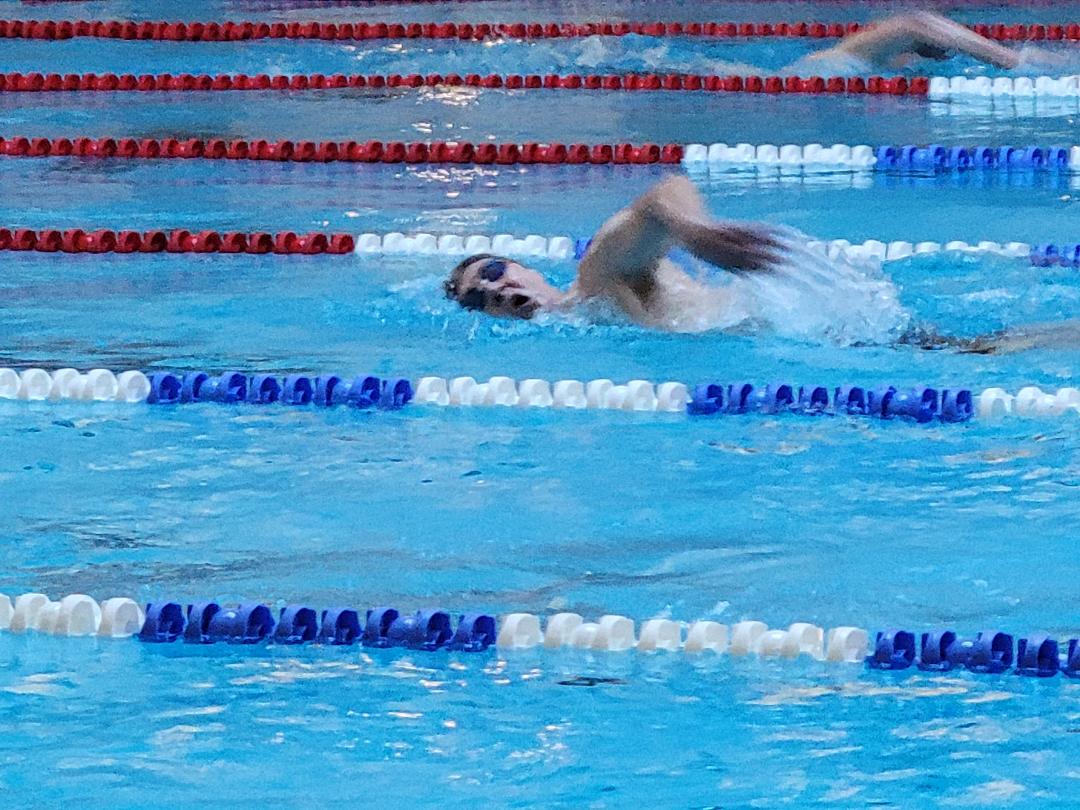
I had fairly early-on also eliminated the 800-meter IM from consideration, because I just felt that I would do better in the Backstroke or the Breaststroke. I was seriously leaning toward choosing the Backstroke, but then I was considering that I always swim Backstroke indoors, sighting on the ceiling to stay straight within the lane. My concern was that in an outdoor venue, with no ceiling to sight on, that I would be all over the lane lines. I am not the world’s straightest swimmer; just ask anyone! As it turned out, I did swim 100-meter, 200-meter, and 400-meter Backstroke, and I had no trouble staying straight in my lane.
So, my choice for the 800 was Breaststroke and I think I chose correctly, as I was able to secure the gold medal in that event! After recovering from my event, we stayed to do volunteer timing for the rest of the session.


Here are some fun things we learned about swimming in Australia on that first day:
- Warm-ups are swum in circles, but the direction of swim is clockwise
- In Australia, it is legal to do a Breaststroke kick with the Butterfly arms (when swimming Butterfly)
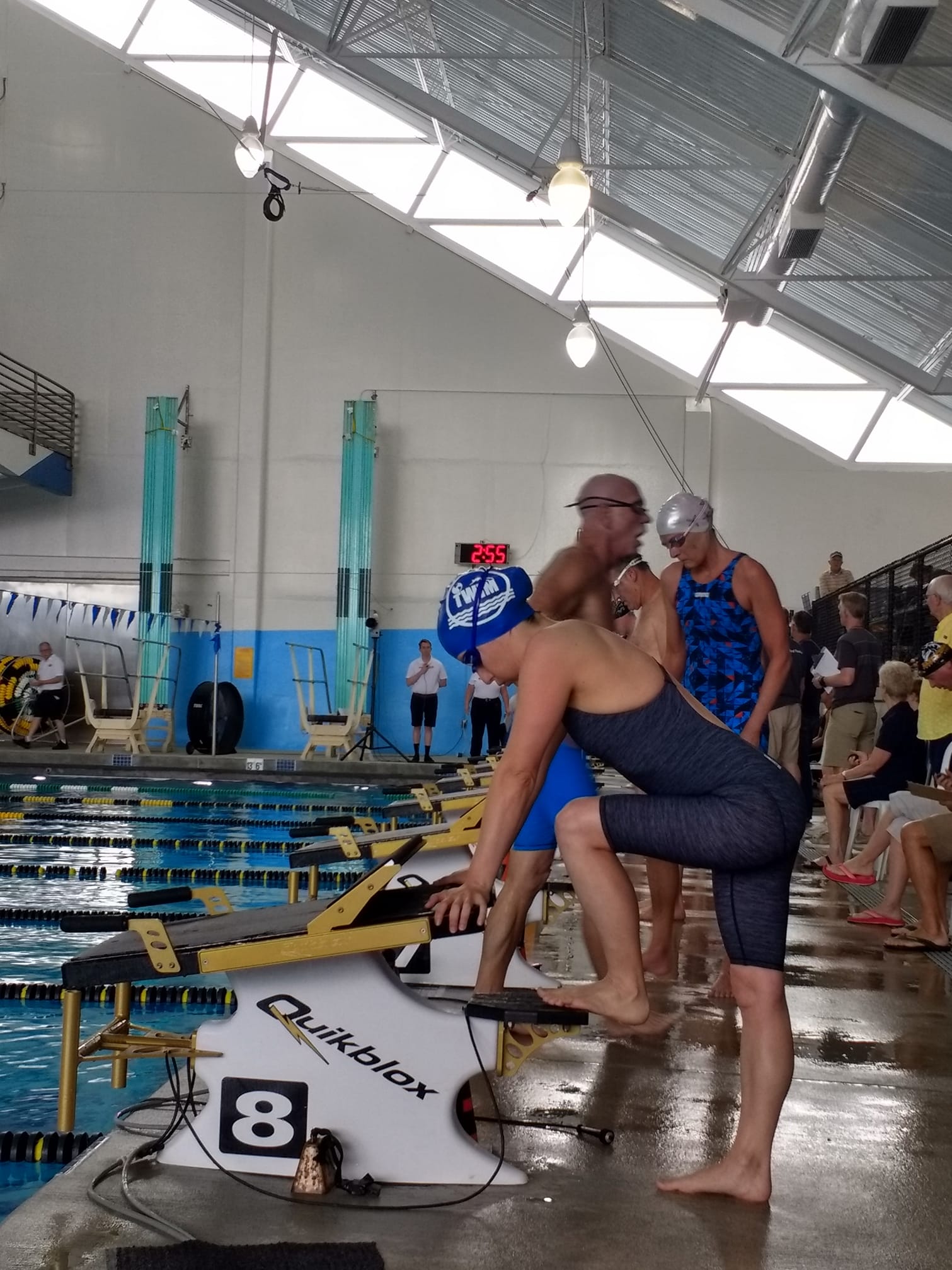
- All of the events in this meet featured flyover starts (you stay in the water, in your lane, after you swim and exit the pool after the next heat departs from the blocks)
- The heats in an event are not pre-announced. The events are self-marshalling. It is up to each swimmer to be at the blocks in the correct lane, and in the correct heat.
- In warm-ups, there is an exclusive diving lane, but it is also permissible to dive in any warm-up lane, at either end of the pool. Just use care not to dive onto any fellow swimmer
- There was great concern that each event in the meet would start on time, and the preference seemed to be that it was even better to start early
Thursday, November 10th was the second day of the meet (and also, the 246th Birthday of the United States Marine Corps). I swam the 400-meter Freestyle, the 100-meter Backstroke, and the 400-meter Breaststroke. My competition in the 400 Breaststroke was Alan Carlisle, the age group National Record holder in the event. He beat me soundly, but my time was good enough to bring home a silver medal.


Friday, November 11 was day three of the meet. It was also Veteran’s Day, celebrated as Remembrance Day in Australia. We took a short break from swimming at 11:00 AM and had a short presentation and a few minutes of silence, as all there remembered, and honored all of those who have made the ultimate sacrifice to preserve our way of life.
It was Mary’s first day of competition, and she posted a good time in the 100-meter Freestyle. I swam the 200-meter Backstroke, the 200-meter IM, and the 100-meter Breaststroke, logging a bronze medal in the 200 IM.


On Saturday, November 12, day four (and the final day of competition) Mary swam in the 50 Freestyle and the 200 Freestyle. I had great disappointment in the 400-meter IM, when after swimming the whole race, I found out that I was disqualified for movement on the block before the start. I also swam in the 400-meter Backstroke and finished my slate of events with the 200-meter Breaststroke.

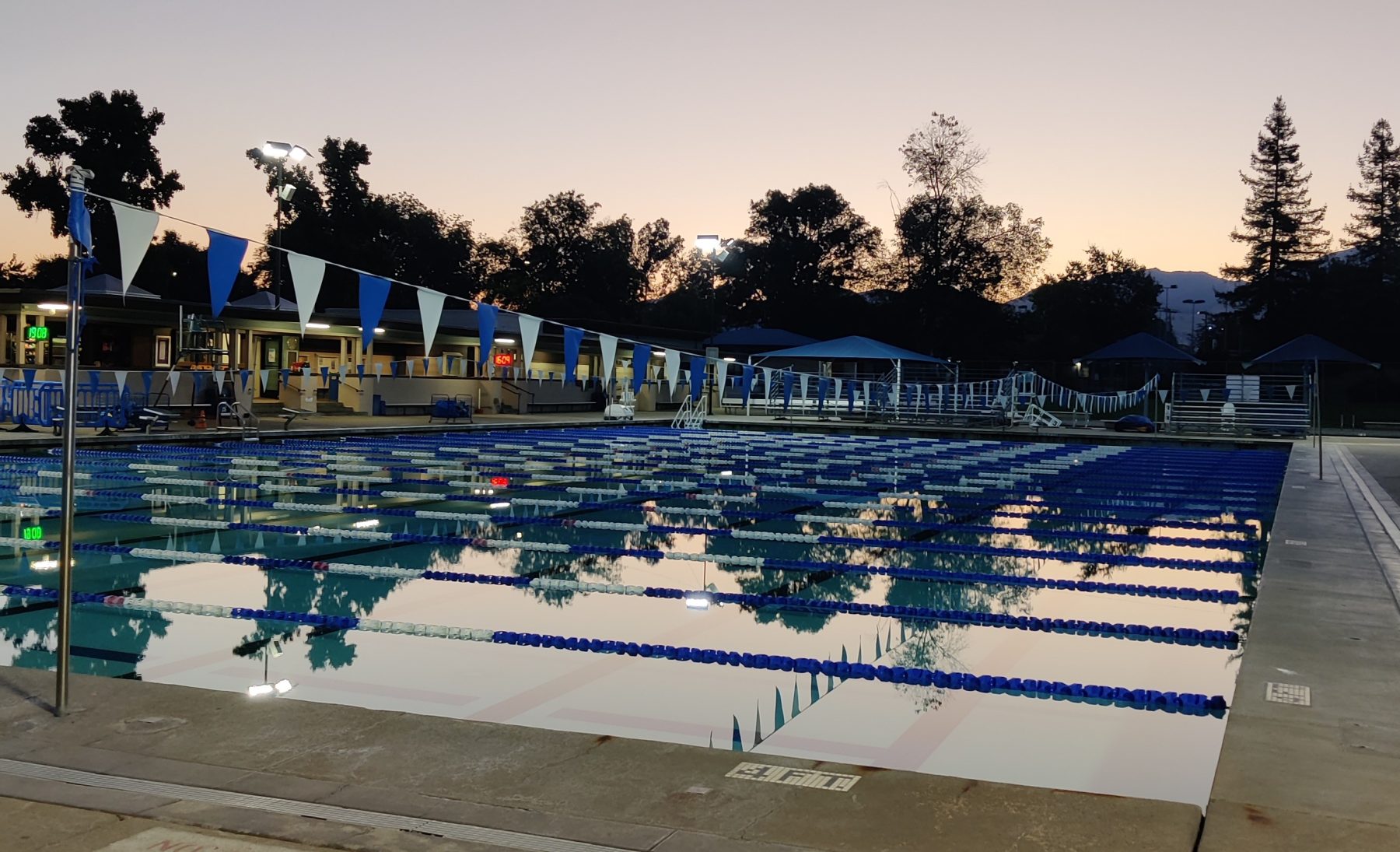
The meet was so well run by our Australian hosts! There were lots of friendly folks at every turn the whole time we were in Australia. The weather was beautiful, and the swimming venue was phenomenal. Two 50-meter 10-lane pools, a for-the-purpose diving pool with springboards and platforms up to 10 meters, a 6-lane 25-meter warmer, shallower pool with a full-length gradual ramp entry, and a kiddie pool with fountains and sprinklers. The organizers have indicated plans to hold these Games again in 2023 and 2024. We would not hesitate to recommend this event and the Queensland/Brisbane/Gold Coast area to anyone!
Wrapping up the Trip
After the meet, we drove up to the Brisbane airport, checked into our final hotel, and returned our car to the rental lot. The next morning, we caught a shuttle to the international terminal. Our flight left Brisbane at about 10:45 AM on Sunday. Again, we crossed the International Date Line, which caused us to arrive in Vancouver, BC, at about 6:30 AM, also on Sunday! It was very strange, essentially arriving a couple of hours before the time we left Australia! Just a little hop down to Seattle and we were home! It was an excellent adventure!